

Patients Not Getting Results With Standard Antifungal Nail Treatments – What To Do Next?
- September 16, 2025
- Posted by: Charelle Paz
- Categories:
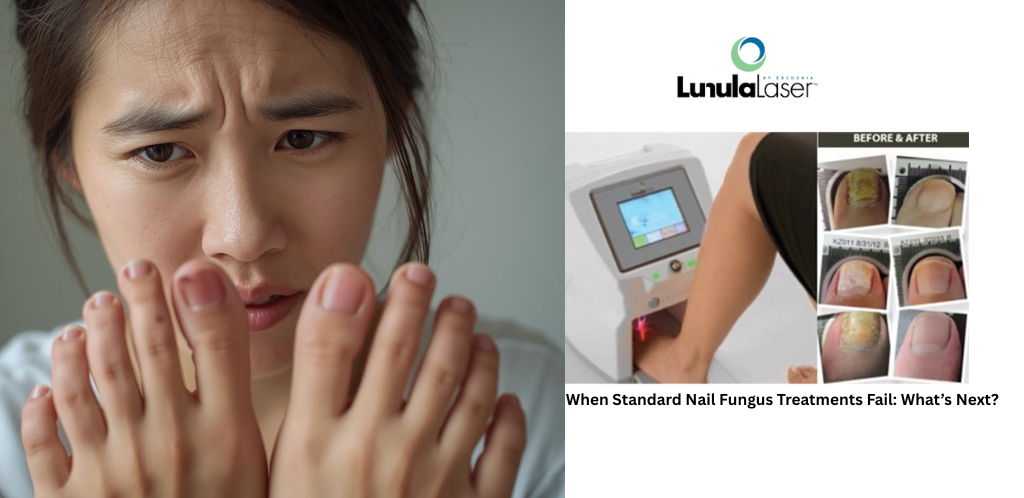
Many podiatrists and practitioners feel disheartened when hearing a patient talk about their frustrations with their fungal nail infection. While some patients may be consulting about the nail fungus for the first time, most patients searching for an effective solution to this frustrating problem will have already invested considerable time, money and energy into treating their fungal toenails with either no success, worsening results, or merely temporary results that quickly deteriorate as soon as the cream or product is discontinued.
So, it’s no surprise that when we ask podiatrists what their greatest dissatisfaction with fungal toenail management is, it’s being able to offer a treatment that actually works, that has long lasting results for their patients, and that they actually feel confident in recommending or prescribing.
With fungal nail infections having a global prevalence of between 10% and 23% 1 which skyrockets up to 50% in those aged over 70 years,2 here’s a look into how clinicians are managing standard fungal nail treatment dissatisfaction among patients, as well as how they’re equipping themselves to treat this prevalent target market and in the process building profitable, win-win professionals relationships based on delivering proven results for nail fungus.
Nail Fungus: The Magnitude Of The Problem
Offering effective and evidence-based solutions for fungal nail infections is becoming a growing concern among podiatrists for several reasons. First, both here in Australia and worldwide, the population is aging. Australia’s population of adults aged over 65 years has expanded from comprising 8.3% of the total population back in 1970, to over 16% of the total population in 2020. The Australian Institute of Health and Welfare projects this to grow to up to 23% by the year 2066.3 With one in two of these older Australians having a fungal nail infection, and many of them being unable to reach their feet to apply lacquers daily, this calls for a simple, effective and hands-free fungal nail solution.
Secondly, the last decade has seen the marketing efforts of clinics and practitioners grow exponentially, meaning that more people are carefully selecting the clinic they want to go to within a 5-10km radius from their home based on the treatments offered, reviews and the clinic culture.
This is opposed to the default and historical approach of going with the ‘foot traffic’ to the closest clinic. This means it’s more important now than ever to ensure that your clinic stands out and has a notable point of difference, with one of them being innovative, evidence-based treatments that make life easier for your patients.
The Problem With ‘Standard’ Nail Fungus Treatment Options
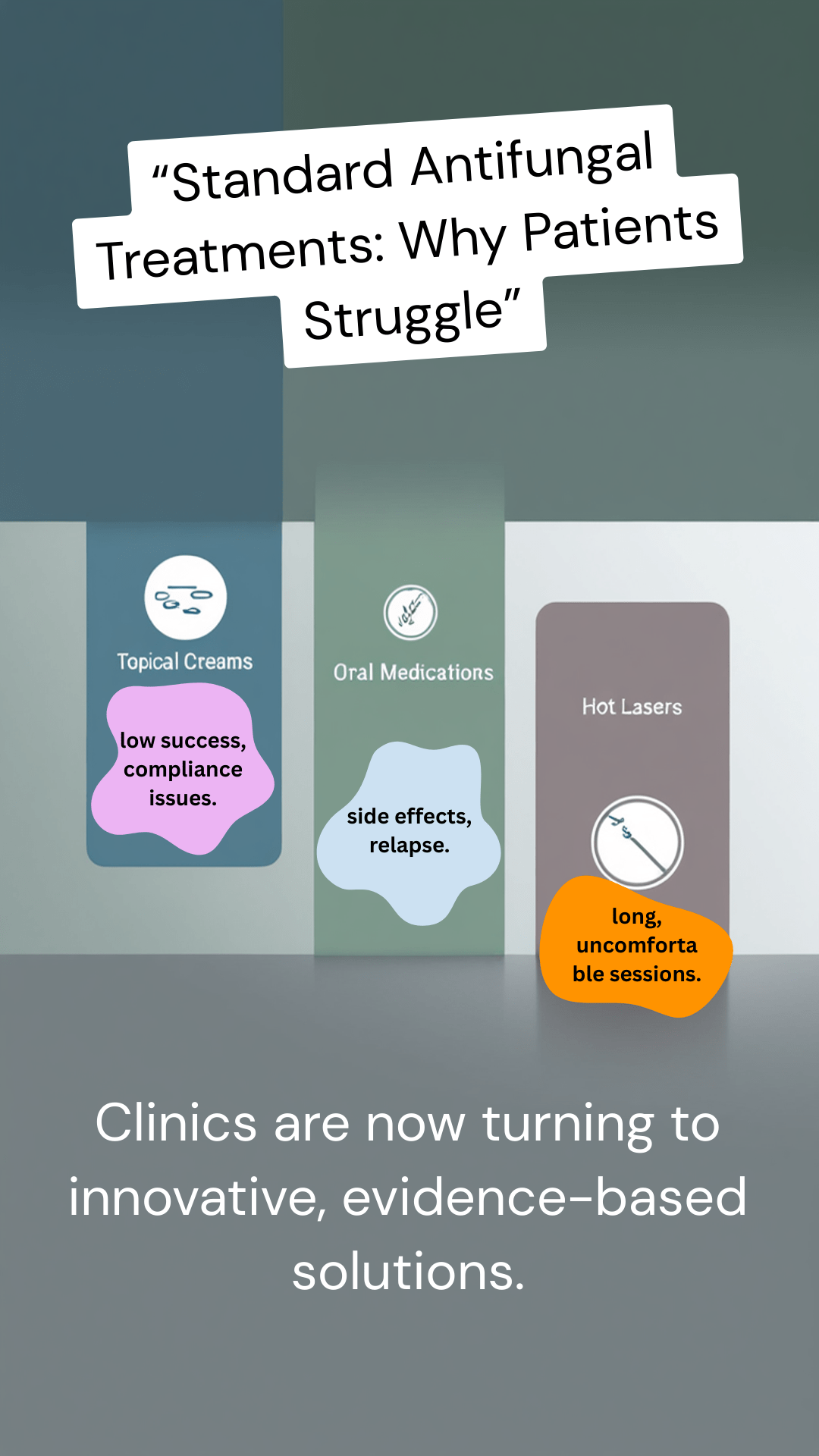
It has long been recognised that factors like efficacy and patient compliance are key problems with standard antifungal treatments, but practitioners are now recognising the true extent of the damage that prescribing these treatment options for their ‘availability’ is having.
Recommending or dispensing products that have poor efficacy ratings can also be greatly damaging to a practitioner’s trust and a clinic’s reputation. Failing to mention and refer for alternative fungal nail therapies, once they are discovered which is commonplace these days with widespread health marketing, can lead to the misconception that other treatment options a clinic offers may not be as effective as what another clinic can offer. Poor efficacy rates also cause word of mouth referrals to drop – all negatively impacting a clinic’s success, growth and profitability. Looking at the specifics or standard fungal nail solutions at present:
Nail Lacquers & Creams (Topical Ointments)
Nail lacquers and creams are a common pharmacy product and often the first option is attempting self-management at home for fungal nail infections. The problem with this treatment approach lies both in its mechanism of action, its clinical efficacy and the side effects:
-
- Despite fungus being present not only on the outside of the nail but also within and below the toenail, standard topical ointments cannot penetrate to reach all of the fungus due to the anatomy of the toenail. Specifically, the concentration of a topical ointment is reported to reduce by 1,000 times when moving from the outer to inner nail areas.4
- Efficacy rates of topical antifungals maintain a relatively low success rate of between 5.5% and 17.8%.5 While this figure may increase up to 38% with regular manual debridement by podiatrists,6 this approach presents many logistical, financial and time barriers that make the prospect unattractive given it cannot guarantee a higher mycological cure rate.
- Applying antifungal ointments daily poses a significant risk of non-compliance in terms of remembering to apply it. Those with mobility restrictions that find it difficult to reach and ‘paint’ the nails may also be discouraged and fail to adhere. Additionally, given the daily application over a recommended 9-12 months, 7 the sheer duration of the commitment can act as a deterrent for continued use.
- Resistance to antifungal treatment through repeated antifungal use is well documented.8This puts patients at risk of wasting time, energy and money on a product that no longer serves their intended function, with no alternatives provided.
Oral Medications
As a systemic ingested drug, oral medications solve the issue of being unable to penetrate the anatomy of the toenail. While oral medications are proven to attain higher clearance and cure rates, the list of problems with or objections to the treatment is still notable:
- One in five people have been found to have a 20% relapse rate within a few months of finishing their treatment with oral antifungals.9
- Many people are not suitable for oral antifungal use due to the risk of side effects or the way the medication interacts with their other medications. For example, the common antifungal itraconazole may enhance the effects of warfarin and oral hypoglycemics which are common in older podiatric patients. Additionally it can cause nausea, headaches, abdominal pain, and skin reactions. Cases of hepatotoxicity have been reported with terbinafine use.10
- Although mycological cure rates have been observed as high as 54% to 70% after 48 weeks of medication use, the complete cure rates in the same study populations were only found to be between 14-38%.9
- Compliance with daily medication use may be an issue. A study of 330 patients that measured their compliance with using oral antifungals found that the overall compliance rate for those taking either itraconazole or terbinafine was only 55%. Of those that were not compliant, 29.73% were worried about the side effects of medicine, 22.3% thought that they had already been cured, 15.54% was due to economic reasons and 12.16% could not bear the side effects of medicine.13
Beyond ‘Standard’ Treatment: What To Do
Given the significant global burden of fungal nail infections, numerous antifungal innovations have been developed over the past decade to help both patients and practitioners overcome the very frustrating problem of poor efficacy rates among antifungal treatments. So either offering one of these treatments, or referring to someone that does, is the logical ‘next step’ of how to help your patients finally get the results they want. So which one is best for your clinic and your patients?
A review of top fungal nail innovations, examined the Clearanail device, PACT photodynamic therapy, hot lasers (as a general category), and the Lunula cold antifungal laser. While many of the devices have higher success rates, they also fail to eliminate current problems and objections to treatments. Clearnail, for example, requires an antifungal application for up to three months following the treatment, failing to eliminate the need for daily topical applications and sustaining the original compliance issues. In this particular case, additional downsides include being unable to wear polish and ‘hide’ the nail beneath as it grows out – a common request by patients given for many this is an aesthetic issue. Read the full report on all of the treatments here.
The Best Option For Patients And Clinics: Lunula Cold Laser
The treatment that does clearly come out on top for both patients and clinics is the Lunula cold laser. This device uses two cool wavelengths of light to produce its fungicidal effects. For practitioners, after the initial nail debridement, the laser application process is entirely automated and hands-off, with a treatment time of only 12 minutes per foot. This time can be leveraged to provide education on preventing reinfection, further supporting the success of the treatment.
For patients, efficacy results for cold laser range from demonstrating an 89% clear nail increase with a 67% treatment success rate,11 to clinical cure and mycological cure rates of 70% and 95% respectively. These figures rise to 90% and 95% by 12 months, with 100% of study participants having new unaffected nail growth.12 Studies conducted using strict protocols by the laser manufacturers have confirmed individual success rates to be as high as 86% at week 12, extending to 99% by week 48.13 All of these results are achieved without spending an hour per treatment session like with hot lasers, and similarly, eliminate the risk of burns.
Next Steps: Refer Or Buy?
So will your clinic benefit best from a referral pathway to a clinic that offers the Lunula cold laser, or from purchasing the device yourself? This question is largely dependent on what your expected returns vs investment would be for the laser, which is also influenced by the treatment charge (which may vary depending on the socioeconomic area in which you practice), the financing cost, marketing costs, and any set up costs.
A review on the ROI of the Lunula laser found that the expected annual return in your first year of the laser ranged from almost $26,000 in a lower socioeconomic area with lower treatment costs, up to just over $130,000 in a higher socioeconomic area. Read the report here.
Lunula also offers a low-cost three-month trial period, including ongoing support, training, marketing materials and patient acquisition training. This further incentivises clinic owners to trial in the clinic and see the results for yourself.Alternatively, you could refer to local clinics already using the Lunula laser, but this gives your competitors the opportunity to develop a long terms patient relationship that will likely produce a steady income stream for their business, instead of you.
There are currently hundreds of clinics profiting from the benefits of Lunula laser while their patients get much-needed relief from the frustrating problem of nail fungus. If you’re ready to see how the Lunula laser can integrate into your clinic and become a valuable asset to your business, contact us at Rehacare on 1300 653 522 or at info@rehacare.com.au.
[1] https://www.ncbi.nlm.nih.gov/pmc/articles/PMC4047123/
[2] https://www1.racgp.org.au/ajgp/2019/october/superficial-fungal-infections
[3] https://www.aihw.gov.au/reports/older-people/older-australians/contents/demographic-profile
[4] https://onlinelibrary.wiley.com/doi/full/10.1111/bjd.13358
[5] https://www.ncbi.nlm.nih.gov/pmc/articles/PMC6600855/
[6] https://www1.racgp.org.au/ajgp/2019/october/superficial-fungal-infections
[7] https://www.medsafe.govt.nz/Consumers/cmi/r/rejuvenail.pdf
[8] https://www.ncbi.nlm.nih.gov/pmc/articles/PMC6124242/
[9] https://www.health.harvard.edu/diseases-and-conditions/staying-one-step-ahead-of-toenail-fungus
[10] https://www.nps.org.au/australian-prescriber/articles/systemic-antifungal-agents-for-cutaneous-fungal-infections
[11] https://www.ncbi.nlm.nih.gov/pmc/articles/PMC5479474
[12] https://www.peertechzpublications.com/articles/IJDCR-7-140.php
[13] https://www.coldlasernailclinic.nz/wp-content/uploads/2018/03/ERCHONIA-LUNULA-Toenail-Onychomycosis-Clinical-Study-Results-Report-FDA-3.docx